
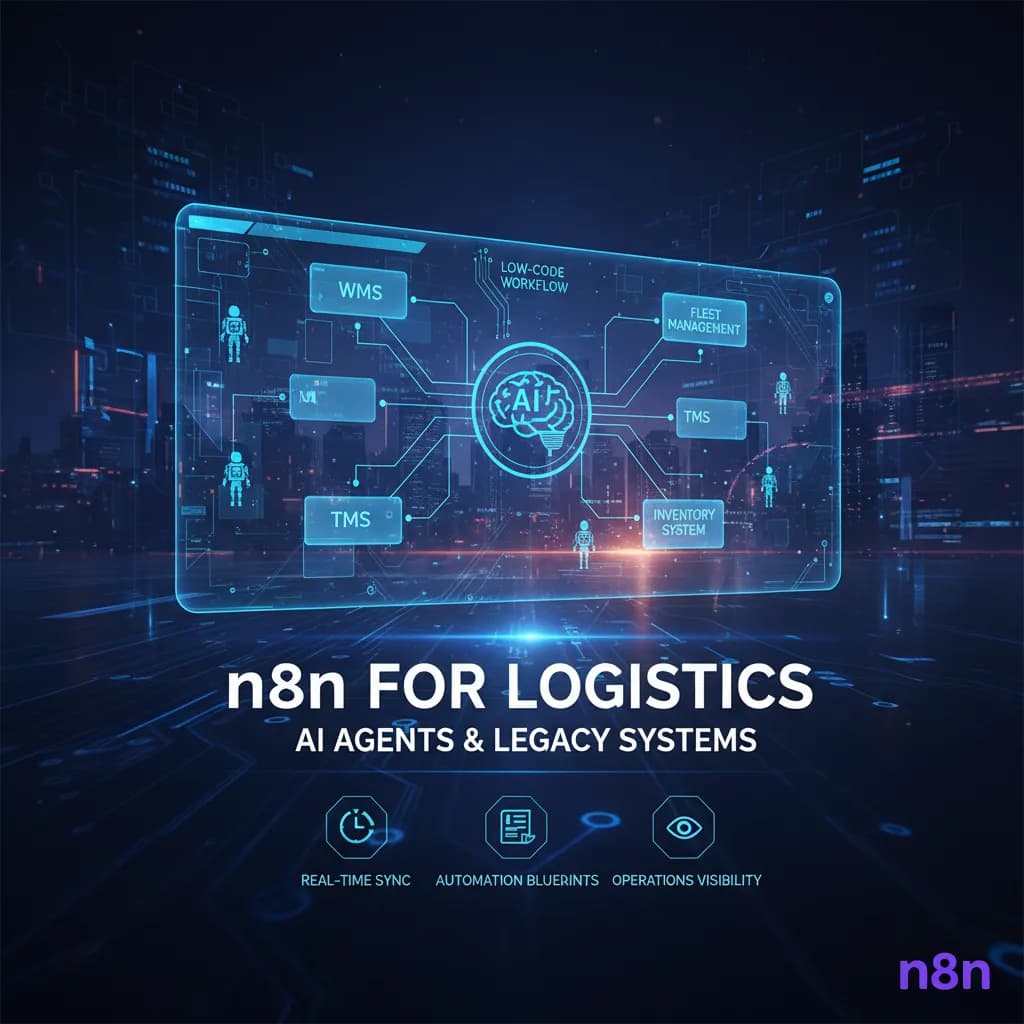

The piece opens with a brief, human-flavored anecdote about a regional dispatcher who once spent entire mornings manually reworking routes for a 60-truck fleet and how that daily ritual evaporated after an AI pilot. It frames the problem: more stops (10–200+), tighter delivery windows, and customer expectations that demand real-time accuracy. The introduction positions AI as the practical tool, not a buzzword — a technology delivering measurable savings, ETA accuracy above 95%, and faster decision cycles.
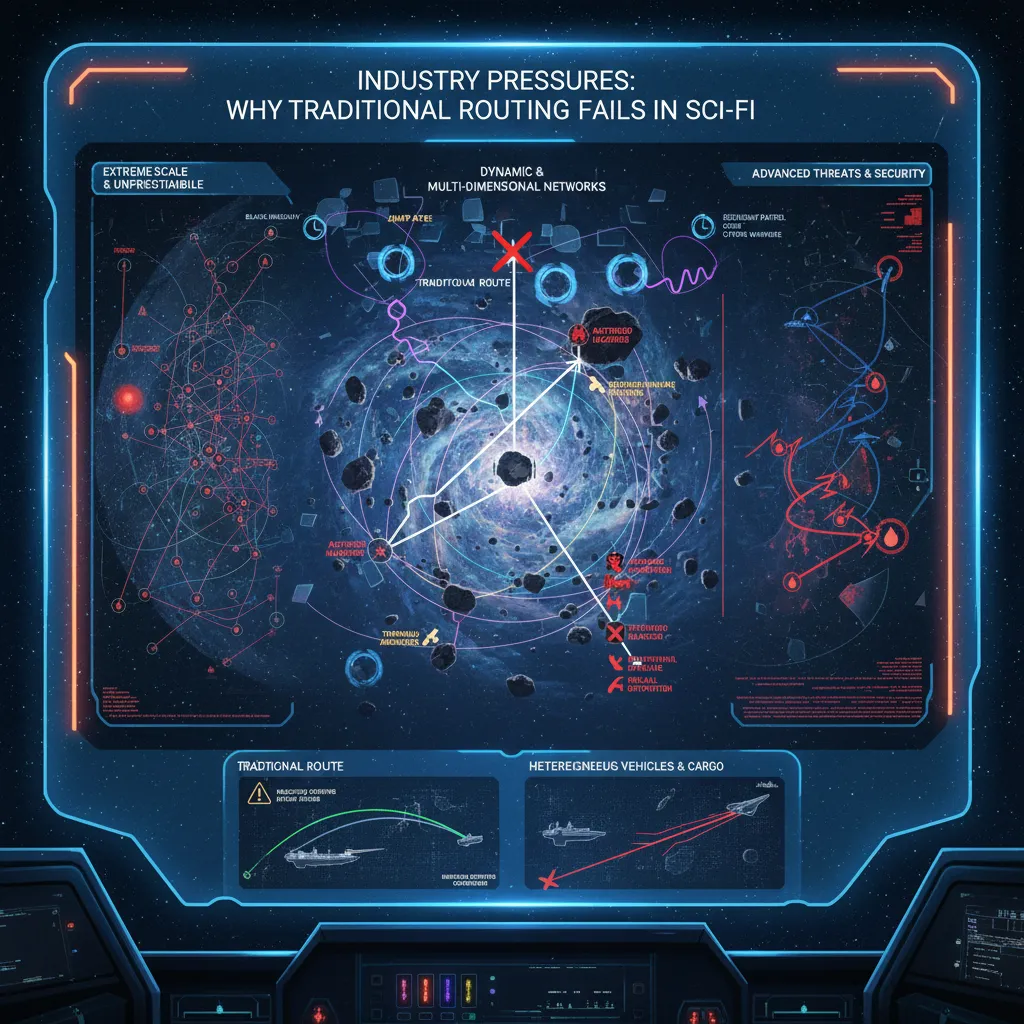
Industry Pressures: Why Traditional Routing Fails
In the AI logistics industry, traditional routing is breaking under modern last-mile demands. E-commerce growth has pushed faster delivery promises, tighter delivery windows, and constant “where is my order?” tracking. At the same time, routes now commonly include 10 to 200+ stops, turning planning into a high-stakes puzzle where small changes (a late pickup, a new order, a traffic jam) can disrupt the entire day.
Stop Density Creates Exponential Complexity
Basic routing tools and manual methods were built for simpler networks. With 10–200+ stops, the number of possible route combinations explodes, and planners are forced to rely on shortcuts and local knowledge instead of true last-mile delivery optimization. That gap shows up in missed windows, uneven driver workloads, and avoidable miles.
Time-Heavy Planning, Low ETA Confidence
Many operations still spend 2–4 hours per planner per day building routes. Manual and static systems also tend to deliver only 70–80% ETA accuracy, which is not enough for customers expecting real-time status updates and precise arrival windows.
Martin Alvarez, Senior Logistics Analyst: "When a planner spends hours on routes, opportunity costs ripple across the whole operation."
Fuel Waste, Wear, and Rising Last-Mile Delivery Costs
Suboptimal routing typically wastes about 30% of fuel, increasing emissions and accelerating vehicle wear. These inefficiencies hit hardest in the last mile, where last-mile delivery costs have risen from 41% to over 50% of total delivery costs since 2018—turning routing quality into a direct margin driver.
Automation Is Blocked by Data Gaps
Even when teams pursue logistics workflow automation, execution often stalls because inputs are unreliable. Poor data quality is cited by 57% of carriers as the biggest barrier to AI adoption, and traditional routing tools offer limited ways to detect, correct, and learn from bad data at scale.
 AI-Powered Dynamic Routing: How It Works" />
AI-Powered Dynamic Routing: How It Works
AI-powered dynamic routing replaces static, distance-only plans with decisions that update as conditions change. Instead of a dispatcher rebuilding routes by hand, dynamic route optimization uses route optimization AI to evaluate dozens of constraints in seconds—often across 10–200+ stops per route—while keeping delivery windows and service rules intact.
1) Machine learning selects the best route, not just the shortest
Modern platforms combine supervised learning, reinforcement learning, and neural networks. Supervised models learn from historical deliveries to predict travel time and stop duration. Neural nets help capture complex patterns (like recurring congestion by neighborhood and hour). Reinforcement learning tests routing choices over time and improves policies based on outcomes.
Dr. Anika Rao, Head of Machine Learning, FleetTech: "Reinforcement learning lets the system adapt to surprises without needing a human to rewrite rules."
2) Real-time re-optimization reacts to disruption
With live traffic, weather, and order feeds, the engine continuously recalculates when conditions shift—accidents, road closures, last-minute orders, failed delivery attempts, or compliance constraints (HOS limits, restricted zones). This is the core difference between static routing and AI-powered dynamic routing: routes are not “final,” they are always current. Research insights show these real-time updates can improve transit times and fuel consumption by about 30%.
3) A constraint engine matches resources to requirements
- Vehicle capacity (weight, volume, temperature control, EV range)
- Driver skills (hazmat, installation, service-level requirements)
- Customer priorities (premium windows, high-value stops, SLA rules)
- Regulatory rules (time windows, access limits, labor constraints)
4) Feedback loops raise ETA accuracy above 95%
After each route, actual arrival times, dwell times, and exceptions feed back into the machine learning algorithms. Over time, ETA accuracy typically rises to >95%, compared with 70–80% under manual planning, enabling tighter windows and fewer missed deliveries.
Operational and Financial Impact (Hard Numbers)
Logistics cost savings from dynamic route optimization
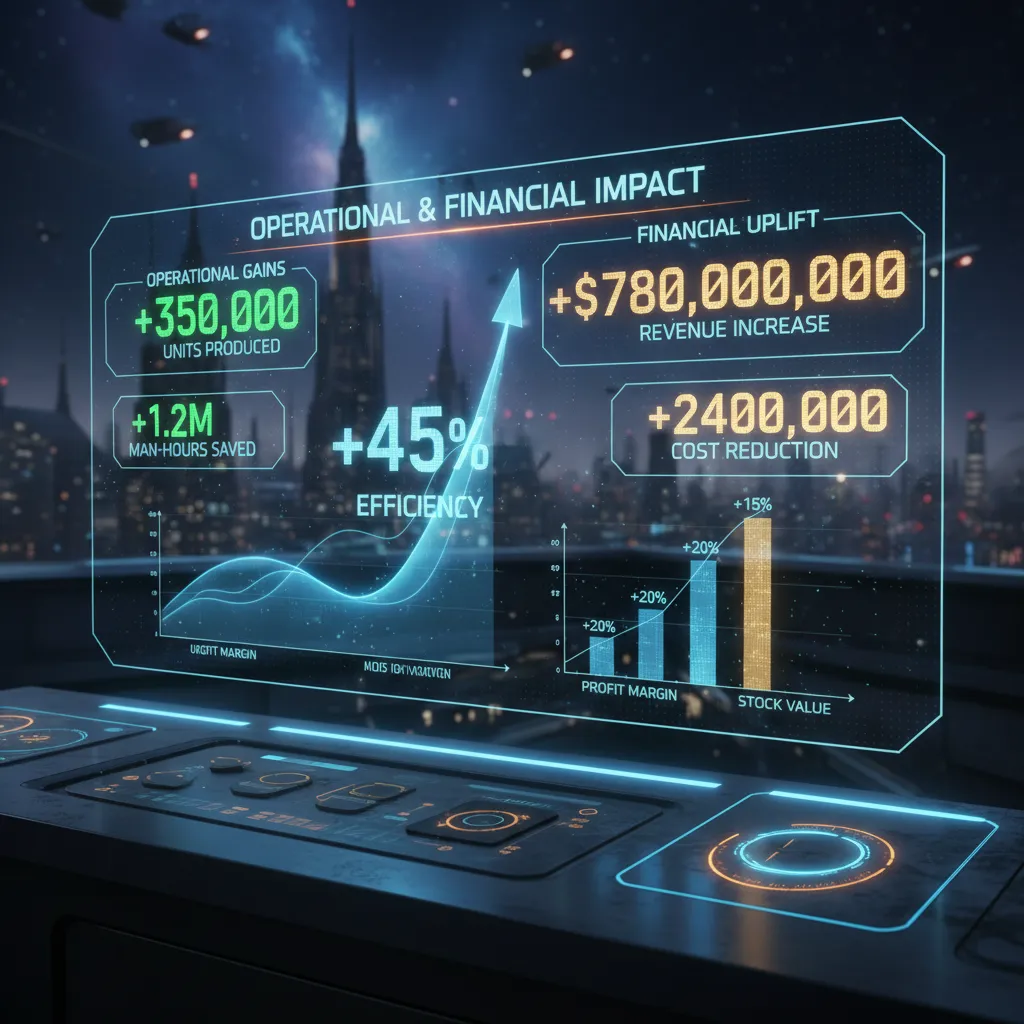
By 2026, fleets using dynamic route optimization commonly report 20–40% reductions in total delivery costs and a 15–30% decrease in cost-per-delivery. These gains come from fewer wasted miles, better stop sequencing, and faster replanning when traffic, weather, or last-minute orders change.
Fuel consumption reduction, maintenance, and ESG impact
Fuel is often the fastest measurable win. AI-driven routing typically delivers a 20–30% fuel consumption reduction, while lower vehicle miles traveled reduces tire wear, brakes, and service intervals. The same mileage and idle-time cuts translate into 20–30% lower CO2 emissions, supporting ESG targets without changing fleet size.
Delivery efficiency metrics that move the P&L
Operational throughput improves alongside cost control. Many operations see 20–40% more deliveries per vehicle per day and a 15–25% increase in driver labor efficiency, driven by balanced workloads and fewer exceptions. Service reliability also rises, with on-time delivery rates reaching 95–99% and failed deliveries dropping 20–40%, reducing re-delivery costs and support tickets.
Planning time compression and ROI timelines
AI cuts daily planning cycles by over 90%, reducing route planning from 2–4 hours to 5–15 minutes. Faster decisions help dispatchers respond to disruptions in near real time and keep routes profitable throughout the day.
- Annual savings: typically $50,000–$500,000+ (by fleet size and route complexity)
- ROI timeline: commonly 3–12 months
Sophie Kim, Director of Operations, FreshDeliver: "We measured a 24% cost-per-delivery drop in the first quarter — the numbers silenced the skeptics."

Customer, Driver, and Sustainability Gains
Customer service automation and predictive delay management
AI route planning improves the customer experience by pushing >95% ETA accuracy into order tracking, with proactive alerts when traffic, weather, or last-minute stops change the plan. With predictive delay management, teams can notify customers before a window is missed, reducing “where is my order?” calls and protecting delivery promises. Combined with customer service automation, conversational AI can resolve 67–78% of routine inquiries without human intervention, freeing agents to handle exceptions and high-value accounts.
Daniela Ortiz, VP Customer Experience, ParcelWorks: "Accurate ETAs change the conversation with customers — fewer calls, fewer complaints, more loyalty."
Across fleets, these improvements translate into measurable outcomes: customer satisfaction rises 10–25%, while failed deliveries fall 20–40%. Fewer failures also mean fewer redeliveries, lower support costs, and stronger repeat business.
Driver outcomes with AI fleet management and AI-powered courier selection
AI fleet management balances workloads by optimizing stop density, time windows, and break rules, which reduces stress and helps cut overtime. Mobile driver apps support turn-by-turn navigation, proof of delivery, and real-time re-optimization when conditions change. Hazard-aware routing can also reduce risky turns, congestion exposure, and fatigue-related incidents.
For service and repair operations, AI-powered courier selection and skill-based routing match the right technician, inventory, and vehicle to each job. In one field service example, first-time fix rates reached 89%, improving productivity and customer outcomes while reducing repeat visits.
Sustainability gains tied to fewer miles
By reducing vehicle miles traveled and idle time, AI optimization typically delivers 20–30% fuel savings and 20–30% CO2 reductions. These gains support ESG commitments while lowering wear-and-tear and improving asset utilization—without adding vehicles or headcount.
Key Features & Technology Integrations
In 2026, AI route planning is defined by speed, adaptability, and tight system connectivity. Multi-stop and multi-modal optimization, live traffic ingestion, and turn-by-turn mobile navigation are now table stakes—especially for routes with 10–200+ stops and strict delivery windows. Leading AI supply chain platforms use machine learning to balance distance, time windows, capacity, driver rules, and customer priority, while continuously recalculating routes when conditions change.
Core Optimization Features for Complex Networks
- Predictive ETAs and dynamic re-routing using traffic, weather, and stop history
- Skill-based driver matching for service levels, hazmat, or white-glove requirements
- Inventory-aware routing that aligns orders, vehicle load, and depot availability
- Compliance constraints (HOS, access rules, customer delivery instructions)
Predictive Analytics and Fleet Reliability
Predictive analytics now forecast delivery demand and traffic patterns, but also extend into predictive maintenance analytics. Research shows predictive analytics in fleet management can reduce vehicle downtime by 50% and cut breakdowns by 70%, protecting route plans from last-minute vehicle failures and lowering overtime and rescue costs.
Integration with Transportation Management Systems and Beyond
Liam O'Connor, CTO, RouteSense: "Seamless integrations decide whether AI becomes a tactical tool or a strategic backbone."
To deliver centralized control, AI routing engines connect via APIs to transportation management systems and operational data sources:
- TMS, WMS, OMS
- GPS/telematics and mobile driver apps
- Fleet maintenance and accounting systems
Automation, Visibility, and Emerging Tech
Performance dashboards, automated customer notifications, and exception alerts improve transparency across dispatch, customer service, and finance. In fulfillment, automation scale is proven—Amazon operates 520,000+ mobile robots, reinforcing why warehouse robotics efficiency and routing must share data. Emerging capabilities include agentic AI for automated decision workflows, digital twins for scenario testing, and EV routing that accounts for range, charging time, and charger availability.
Implementation Roadmap & Budget Guidance
Phase 1 — Assessment & Planning (2–4 weeks)
Teams start by auditing current routing and fleet warehouse management handoffs: stops per route, planner hours, late deliveries, and fuel waste. KPIs should be defined upfront, including cost per delivery, on-time %, fuel per mile, and failed-delivery rate. The pilot scope is then set (routes, depots, vehicle types), along with data owners and a baseline for savings.
Phase 2 — Solution Selection (4–6 weeks)
Vendor evaluation should focus on ML depth, real-time re-optimization, and integration into AI supply chain platforms (TMS/WMS/OMS, GPS, maintenance, and accounting). Buyers should require live demos, references, and hands-on testing to confirm fit for logistics workflow automation in AI logistics 2026 conditions (traffic, weather, time windows, capacity, and driver rules).
Phase 3 — Pilot Program (4–8 weeks)
Run a staged pilot with 10–20% of the fleet, clean location and order data, and operate legacy and AI routing in parallel. Success is proven through KPI lift and ROI math (most fleets see payback in 3–12 months, depending on size and complexity).
Rajiv Patel, VP Product, FleetLogic: "A staged pilot removes the mystery — and the resistance — from AI adoption."
Phase 4–5 — Full Deployment and Scaling (8–12 weeks + ongoing)
Roll out by region or depot, with structured training: 4–8 hours for dispatchers and 2–4 hours for drivers. Ongoing optimization should include weekly KPI reviews, exception handling rules, and new data feeds (customer priorities, service times, EV constraints).
Budget by Fleet Size (software costs scale predictably)
| Fleet size | Software cost | Expected annual savings | Typical ROI |
|---|---|---|---|
| Small (5–25) | $2,000–$10,000/mo | $25,000–$100,000 | 3–9 months |
| Medium (25–100) | $10,000–$40,000/mo | $100,000–$500,000 | 6–12 months |
| Large (100+) | $40,000–$150,000+/mo | >$500,000 | 6–18 months |
Real-World Case Studies & Measured Outcomes
Across the AI logistics industry, measured results show that route optimization real-time is no longer a “nice to have.” In one national parcel network, a 6-month AI rollout delivered $2.3M in annual fuel savings and lifted on-time performance from 82% to 96%. Leadership tied the gains to dynamic re-routing, fewer empty miles, and better stop sequencing.
Helen Gardner, COO, RegionalParcel: “The fuel numbers arrived like a check in the mail — unexpected and undeniable.”
Before-and-After KPIs (by sector)
| Sector | Timeline | Measured outcomes |
|---|---|---|
| Parcel | 6 months | $2.3M/year fuel savings; on-time 82% → 96% |
| Food distribution | Pilot → rollout | Window compliance +42%; costs −18%; service coverage +25% |
| E-commerce last mile | Scale phase | Fleet 50 → 200 vehicles with no added dispatchers; ETA accuracy 97%; cost/delivery −24% |
| Field service & repair | Operational quarter | First-time fix 89%; CSAT 3.8 → 4.6/5 |
What changed operationally
- Last-mile delivery optimization improved when platforms re-planned routes after traffic, cancellations, and late orders.
- AI-assisted routing load matching reduced missed windows by pairing vehicle capacity, driver skills, and inventory to each stop.
One dispatcher reported reclaiming two hours per day previously spent rebuilding routes, using that time for exception management and carrier performance reviews instead.
At enterprise scale, UPS’s ORION program is often cited as proof that AI routing can compound: it generates over $400M in annual savings through continuous optimization and standardization.

Challenges, Change Management & Future Outlook
Common blockers: data, people, and expectations
AI route planning delivers fast savings, but adoption can stall for predictable reasons. The biggest barrier is data: 57% of carriers cite poor data quality as the primary blocker. Missing addresses, inconsistent stop times, and inaccurate service windows reduce ETA accuracy and weaken exception management prevention. Resistance to change is also common—dispatchers may distrust “black box” decisions, while drivers may worry about tighter monitoring. Integration complexity (TMS/WMS/OMS, telematics, maintenance, and accounting) can delay value, and unrealistic expectations—such as “set-and-forget” automation—create early disappointment.
Caroline Ng, VP Supply Chain Strategy: “Good data is the oxygen of AI — without it, even the best models fail.”
Change management playbook (KPI-led)
- Phased rollouts: pilot 10–20% of routes, run parallel planning, then expand by depot or region.
- Data cleaning sprints: standardize addresses, geocodes, time windows, and driver/vehicle attributes before model tuning.
- Clear success criteria: track cost per delivery, on-time %, miles, fuel, and planner time; publish weekly “small wins.”
- Training + champions: 4–8 hours for dispatchers, 2–4 for drivers; appoint stakeholder champions to handle feedback loops.
- Human oversight: agentic AI systems should recommend and learn, while dispatch retains final control for high-impact exceptions.
Future outlook: predictive, autonomous, and simulated operations
By 2026, AI routing is moving from advantage to baseline, with adoption projected to rise from 74% (2024) toward 94% by 2029. Near-term roadmaps emphasize predictive analytics forecasting (demand, traffic, and customer availability), hyperlocal weather adaptation, and crowdsourced real-time signals. Many fleets will also pair routing with pricing decisions—42% of carriers see the biggest AI impact in pricing and lane optimization (vs. 31% in driver scheduling and route planning).
What’s next in optimization
Expect multi-modal planning, EV-aware charging routes, and autonomous fleets digital twins to test policies safely before rollout—improving service levels while reducing costly exceptions.
Wild Cards: Analogies, Scenarios and Practical Takeaways
Analogy: AI routing as an orchestra conductor
In 2026, AI route planning works less like a map and more like a skilled orchestra conductor—coordinating time windows, traffic, capacity, driver skills, and customer priority so the day runs in harmony rather than noise. This is where logistics workflow automation matters: it removes the “manual tuning” that burns 2–4 hours per planner and often wastes fuel through small, compounding routing mistakes.
Scenario: a two-week pilot that changes the conversation
Imagine a mid-size grocer running a two-week pilot across 15% of its fleet. With real-time re-optimization and predictive analytics forecasting for traffic and stop duration, dispatchers see fewer exceptions, and customers get tighter ETAs. By day 14, the team measures 28% fewer customer service calls and a 30% reduction in empty miles from better backhauls and route balancing. The driver impact is real too: one driver jokes that the new plan finally gives time for an extra coffee break between dense stop clusters—small, human proof that efficiency can reduce stress.
AI-powered courier selection: match the job to the right wheels
Beyond routing, AI-powered courier selection reduces waste by matching loads to the best vehicle and driver profile. Uber Freight reports AI matching can cut empty miles by up to 15%, reinforcing a simple lesson: outcomes beat marketing claims when the metric is miles not moved.
Ethan Moore, Logistics Transformation Lead: "Small pilots with clear KPIs turn skepticism into measurable momentum."
Next steps should be immediate and practical: assess current KPIs and data quality, shortlist 3–5 vendors, demand live demos, verify references, and define pilot metrics before rollout. To reduce decision friction, teams should use interactive tools—an ROI calculator, a vendor checklist, and a KPI tracker—so the business case stays grounded in measurable savings, not promises.