
Imagine it's midnight. Your warehouse just received a massive surge of orders that needs to be processed immediately. In the old days, this meant waking up your team and scrambling to handle everything manually. Today, AI-powered automation can handle it all while you sleep.
This is exactly what happened to one logistics lead who described a midnight order surge that only a hastily put-together set of scripts could handle. The system was fragile, hard to understand, and constantly breaking. Then they discovered n8n, a platform that turned that chaotic setup into a visible, reliable automation engine powered by AI agents.
What Is n8n and Why Does It Matter?
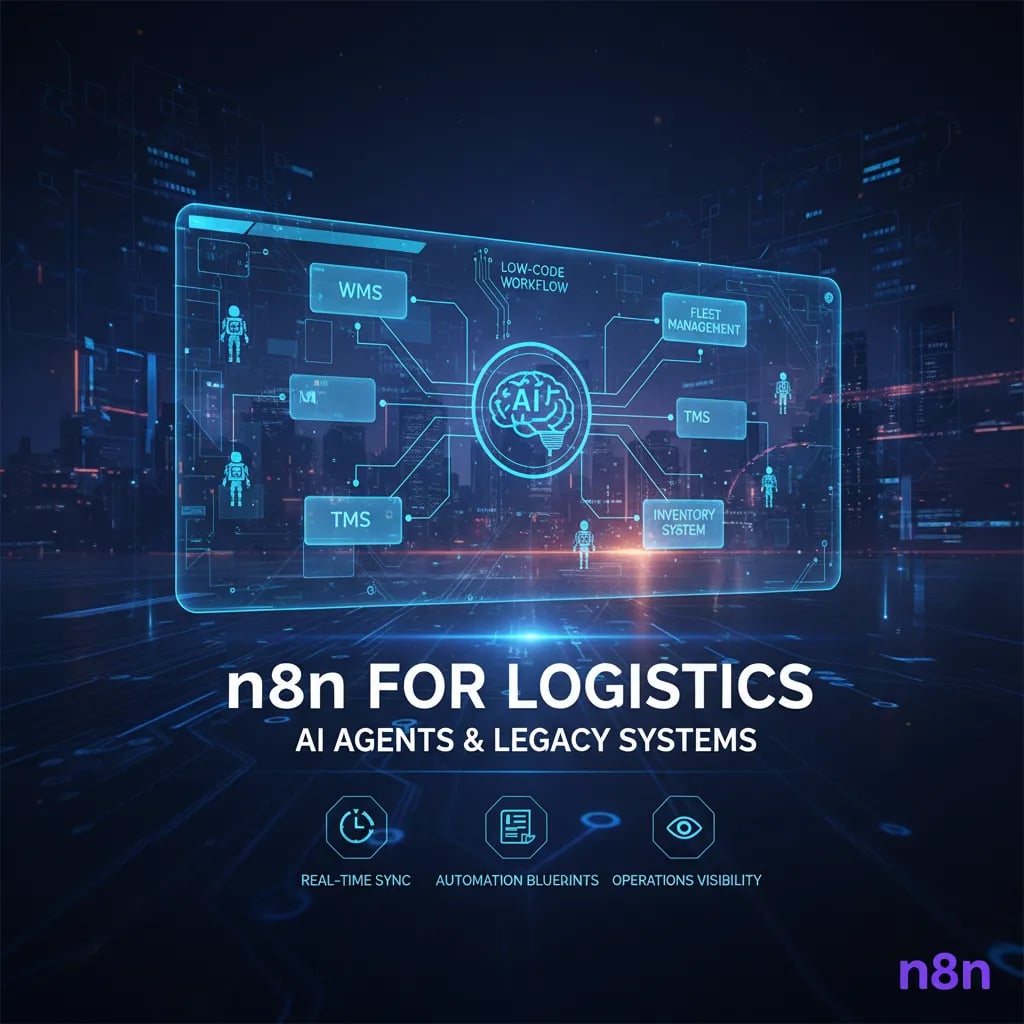
At its core, n8n is a workflow automation platform that acts like a digital conductor for your logistics operations. It connects all your different systems—your warehouse management system, fleet tracking, transport management, and everything in between—and makes them work together seamlessly.
The beauty of n8n is that it makes automation visible. Instead of hidden scripts running in the background that only one person understands, you get clear diagrams showing exactly what's happening, who's responsible, and what happens next.
"Visibility wins over complexity — agents must be seen, not just run." - Alex Varela, Logistics Automation Lead
The Control Tower: Seeing Everything at Once
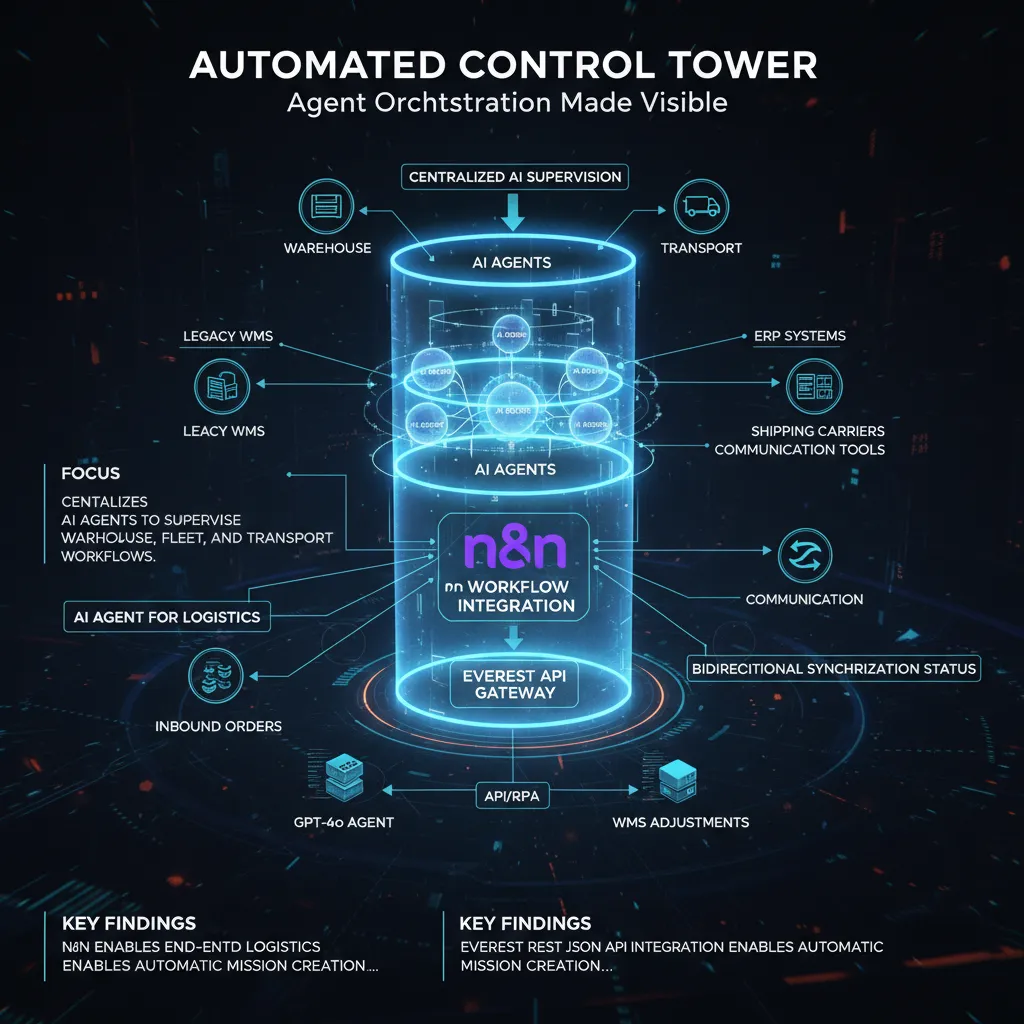
Think of n8n as creating an automated control tower for your logistics operations. This control tower supervises every AI agent working on your behalf—from order intake to dispatch to handling exceptions. You can see warehouse flows, fleet movements, and transport operations all in one place, with clear status updates and next actions.
The system works in layers. At the top, you have your AI agents handling specific tasks like processing orders, managing dispatch, and dealing with exceptions. In the middle, n8n orchestrates these workflows, handling events, applying rules, and managing approvals. At the bottom, you have all your actual systems: your warehouse management system, fleet tracking, transport management, ERP, carrier connections, and communication channels like email and chat.
How It Actually Works: Event-Driven Magic
The key to n8n's power is that it's event-driven. This means it automatically responds to things happening in real-time. When an order email arrives, when there's a delay in warehouse picking, when a GPS geofence is crossed, or when proof of delivery is uploaded—each of these events triggers the right agent to take action.
Here's a real example of how this works: An AI agent (powered by GPT-4o) receives and parses an order email. It validates the product codes, updates your warehouse system through API connections, creates a delivery mission in your transport system, and then the dispatch optimization assigns drivers. The entire process happens automatically and is five times faster than manual assignment. If there's an exception that needs human judgment, it opens an approval request in Slack or Teams.
"We reclaimed hours each week by automating routing and booking with n8n-driven agents." - Daniel Richter, Head of Operations
Connecting Everything: APIs and Legacy Systems
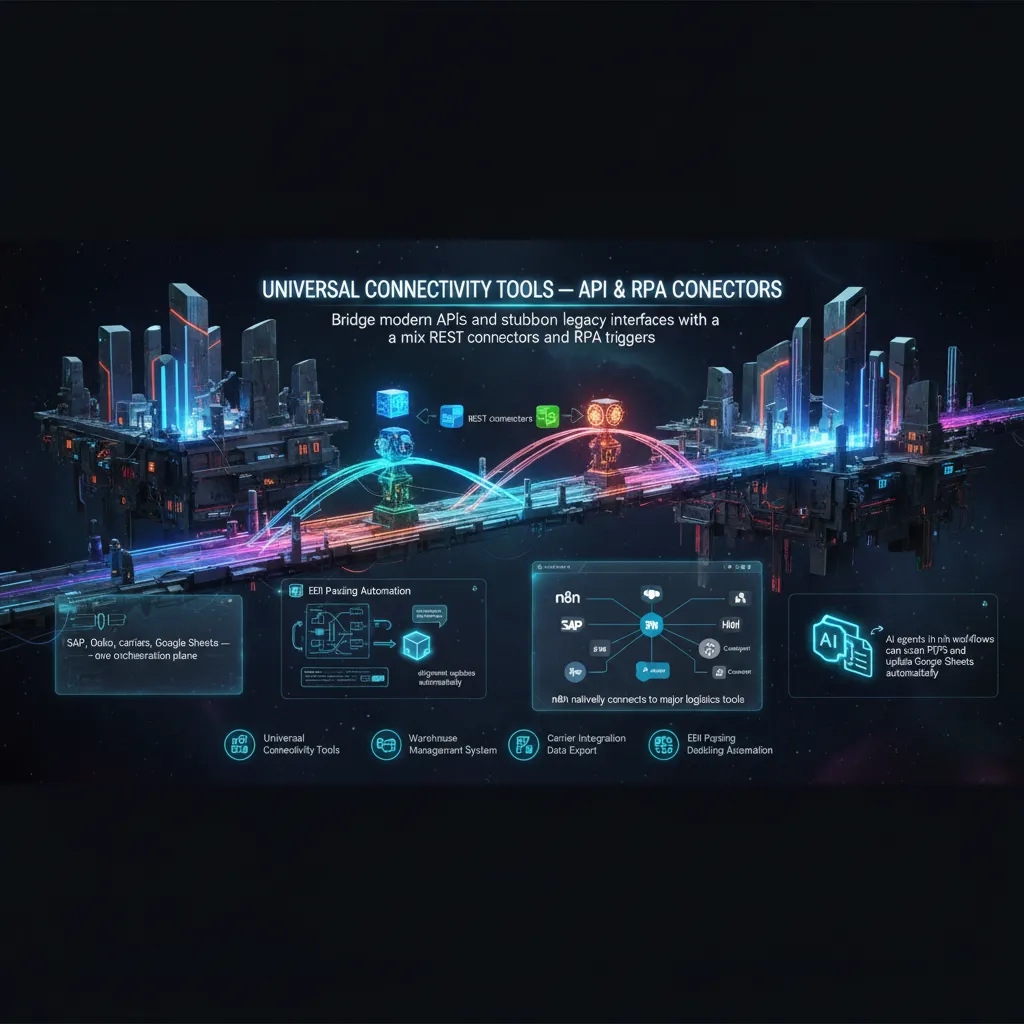
One of the biggest challenges in logistics is that you're dealing with both modern cloud systems and old legacy software. Some systems have nice, clean APIs you can connect to. Others are ancient applications that only have clunky screens and no modern interfaces.
n8n handles both. It has native connectors for major logistics platforms: SAP, Odoo, Salesforce, HubSpot, and various transport management and carrier systems. When there's a stable API, n8n uses it. When there isn't, n8n can use robotic process automation to literally click through legacy screens, export files, or trigger batch jobs—whatever it takes to keep things moving.
"The trick is graceful fallbacks — when an API fails, RPA steps in without human triage." - Marta Nowak, Integration Architect
This flexibility is crucial. It means you don't need to rip out and replace your existing systems to get the benefits of automation. You can work with what you have while gradually modernizing.
Real Workflows That Save Time
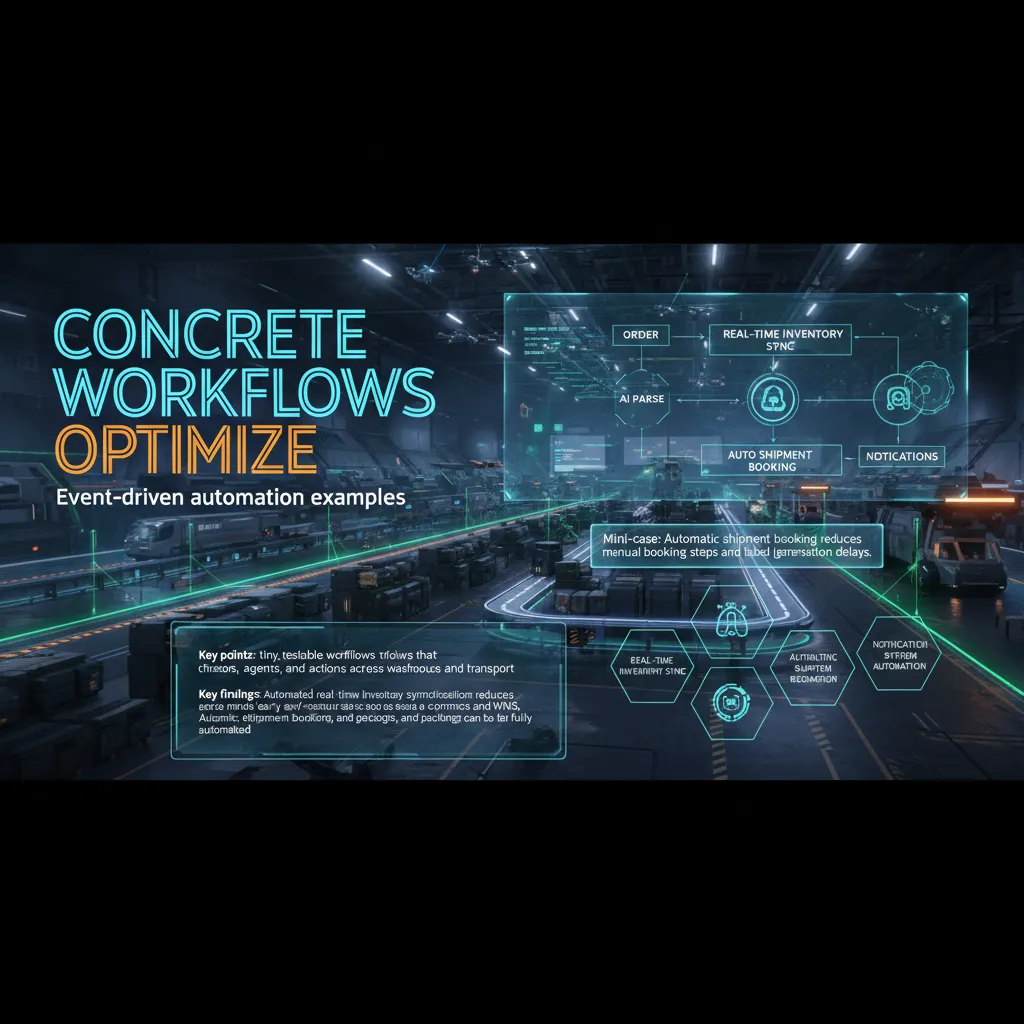
Let's look at a concrete example: automated order processing. When an order comes in through a webhook from your online shop or EDI system, here's what happens:
First, an AI agent parses the order and extracts the product codes, shipping address, and service level. It automatically flags any exceptions that need attention. Then, it updates your warehouse system and synchronizes inventory in real-time across all your platforms, reducing manual data entry and improving accuracy.
Next, it automatically books the shipment with the carrier, generates shipping labels, and starts tracking. Finally, it sends notifications about shipment status through email, SMS, Slack, or even Telegram bots—whatever channels your team and customers use.
The impact? This automation can save 15 minutes per order by eliminating re-keying data and handoffs between systems. That might not sound like much for one order, but multiply it across hundreds or thousands of orders, and you're talking about serious time savings.
The Six-Step Roadmap to Implementation
Getting started with automation doesn't have to be overwhelming. Here's a straightforward roadmap:
Step 1: Analyze Your Supply Chain - Map out how information flows between your warehouse, fleet, and transport systems. Identify delays, manual steps, and gaps in your data.
Step 2: Design Your Automation Roadmap - Don't try to automate everything at once. Pick the high-impact processes first. Define who's responsible, what events trigger actions, and what success looks like (cost savings, better service levels, etc.).
Step 3: Build Custom Workflows - Create your agent orchestration using n8n's API and RPA connectors. Add human approval steps where needed—automation should enhance human judgment, not replace it entirely.
Step 4: Test End-to-End - Before going live, replay real orders through your system. Test the complete journey from order receipt through warehouse picking and packing to dispatch and proof of delivery. Validate how exceptions and retries are handled.
Step 5: Deploy in Waves - Roll out gradually. Monitor queues, logs, and alerts across all your systems, especially the legacy ones.
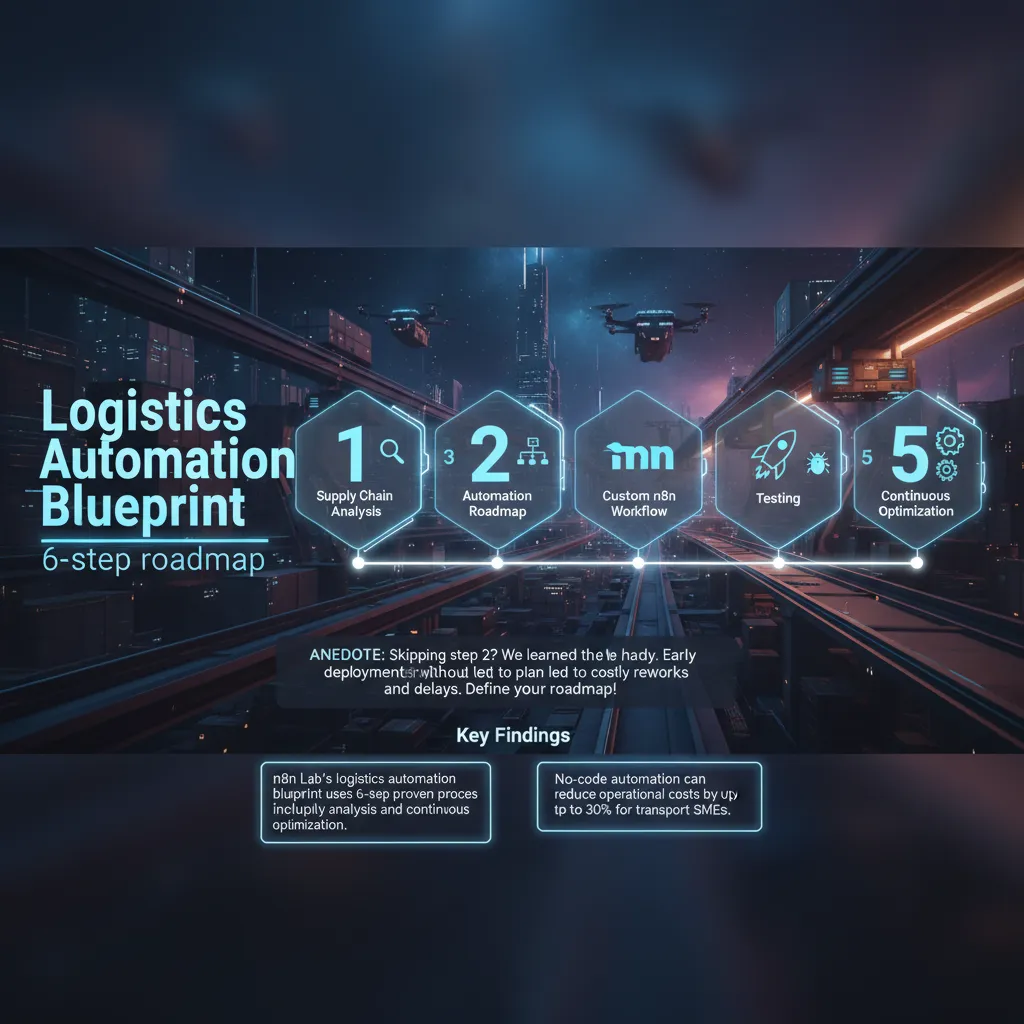
Step 6: Optimize Continuously - Review and refine your workflows weekly. Small improvements compound quickly.
"A short roadmap saves months of rework—visual checkpoints help teams align." - Sofia Mendes, Product Manager
One cautionary tale: A third-party logistics provider skipped Step 2 and automated the wrong exception handling path. They ended up paying twice to rebuild the system properly. Taking time upfront to plan saves money later.
Testing Before You Leap
The best automation implementations use sandboxed environments and mock systems for testing. You don't want to experiment on your live production systems. Create test orders, replay webhooks, validate that inventory syncs correctly, verify exception handling works, and test all your notification systems.
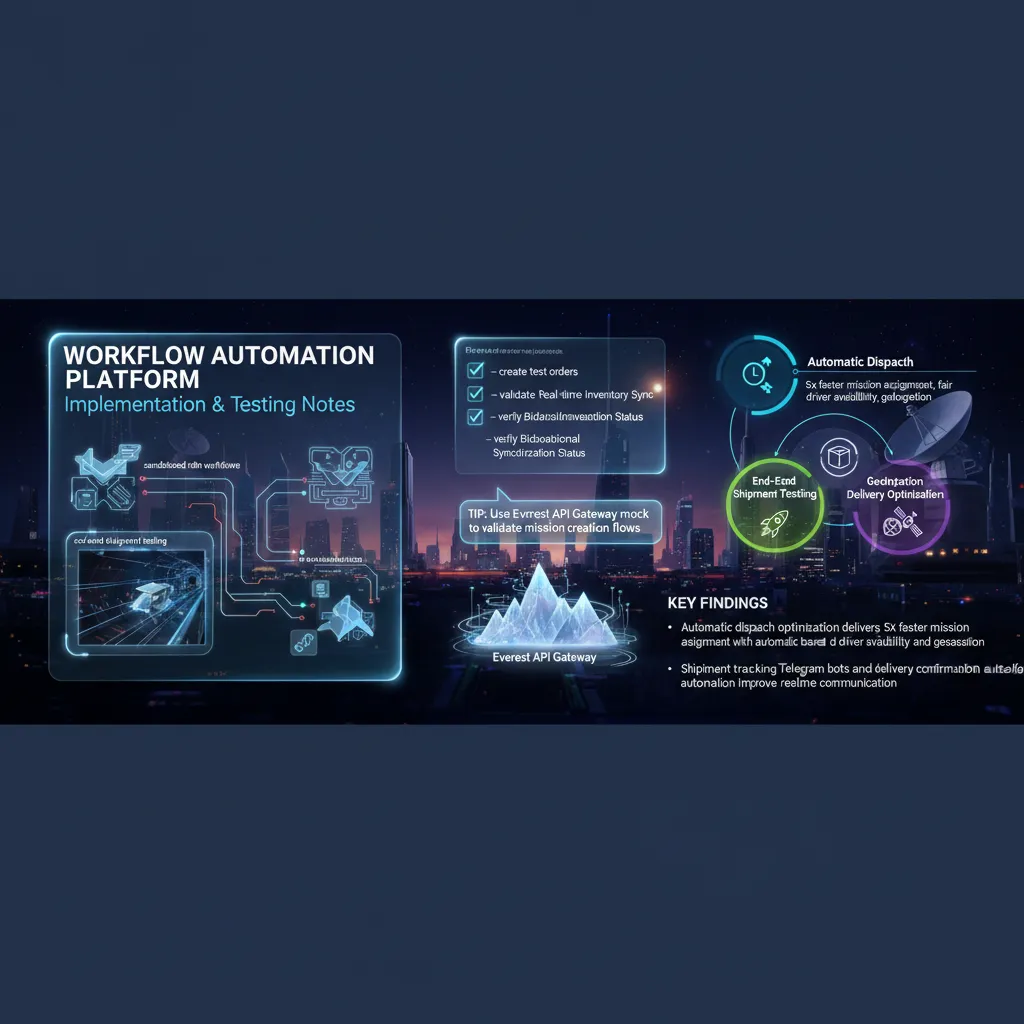
For dispatch optimization, test that driver assignments are fair and use geolocation data properly. The results can be dramatic: properly implemented automatic dispatch can deliver mission assignments five times faster than manual processes.
"Testing is where n8n's visibility pays dividends—every webhook reviewed avoids customer calls." - Liam O'Connor, QA Lead
The Bottom Line: ROI and Real Impact
Finance teams and executives want to see numbers. Here's what automation can deliver:
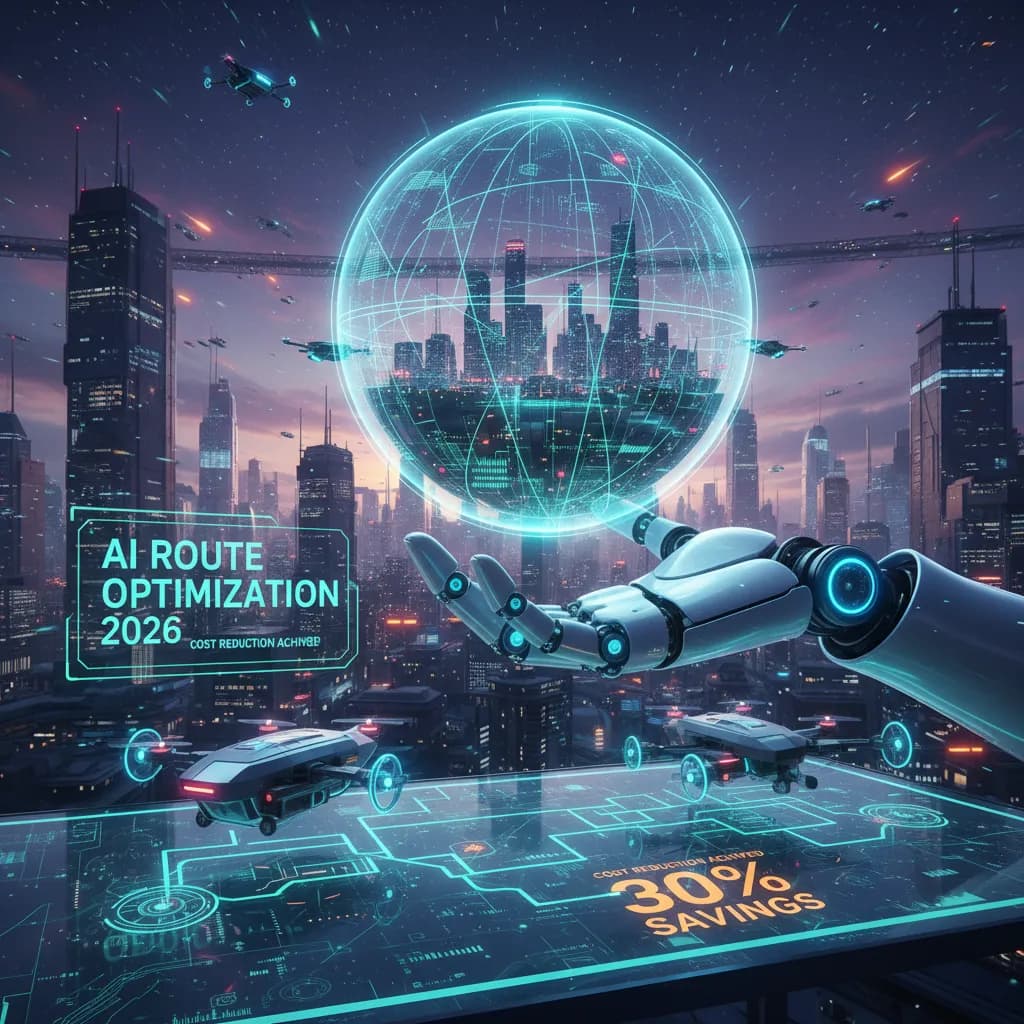
Transport SMEs using n8n with AI agents and connectors can reduce operating costs by up to 30%. That's not a small improvement—that's transformation.
Breaking it down by use case: Order processing automation saves 15 minutes per order. Automated exception handling delivers about 800 euros per month in savings for every 100 orders by reducing manual touches. Automatic dispatch and fleet management delivers five times faster mission assignment.
"We saw payback inside months—automation changed forecasting from guesswork to data." - Isabella Romano, CFO
The Human Side of Automation
Here's something important that often gets overlooked: good automation doesn't replace people—it frees them up to solve genuinely new problems instead of doing repetitive work.
One warehouse lead joked that after the first week of automation, the team stopped "checking the checker." They stopped second-guessing the automated system because it proved itself reliable. That's the goal: creating what one strategist called "digital muscle memory"—automation that's repeatable, invisible, and reliable.
"Automation becomes digital muscle memory—repeatable, invisible, reliable." - Oliver Grant, Head of Logistics Strategy
Think of it like the difference between a 1950s telephone switchboard operator and modern cloud systems. n8n sits in the middle, acting like that operator who's plugging cables and translating signals between your old and new systems—using APIs where possible, and using automated screen interactions when that's all that's available.
Preparing for the Unexpected
One of the most valuable ways to think about automation is as rehearsal for disaster. During a surge-day drill—when orders spike, carriers slip, and exceptions pile up—n8n orchestration lets AI agents triage everything automatically. The agent parses incoming emails, creates clean records, flags risky shipping lanes, pushes live tracking updates through messaging bots, collects delivery confirmations, and reroutes shipments while updating all relevant systems.
In simulated tests of these surge scenarios, this automated supply chain loop cuts manual intervention by 70%. When the real surge happens, your team isn't scrambling—they're supervising a well-oiled machine.
Getting Started
The path forward is straightforward: use n8n to orchestrate AI agents, connect both modern APIs and legacy systems through RPA fallbacks, and build event-driven, end-to-end logistics automation. The result is fast ROI and fewer errors.
Start small with one high-impact workflow. Prove the value. Then expand. The technology is ready. The question is: are you ready to let automation handle the midnight surge while you sleep?
